Handling
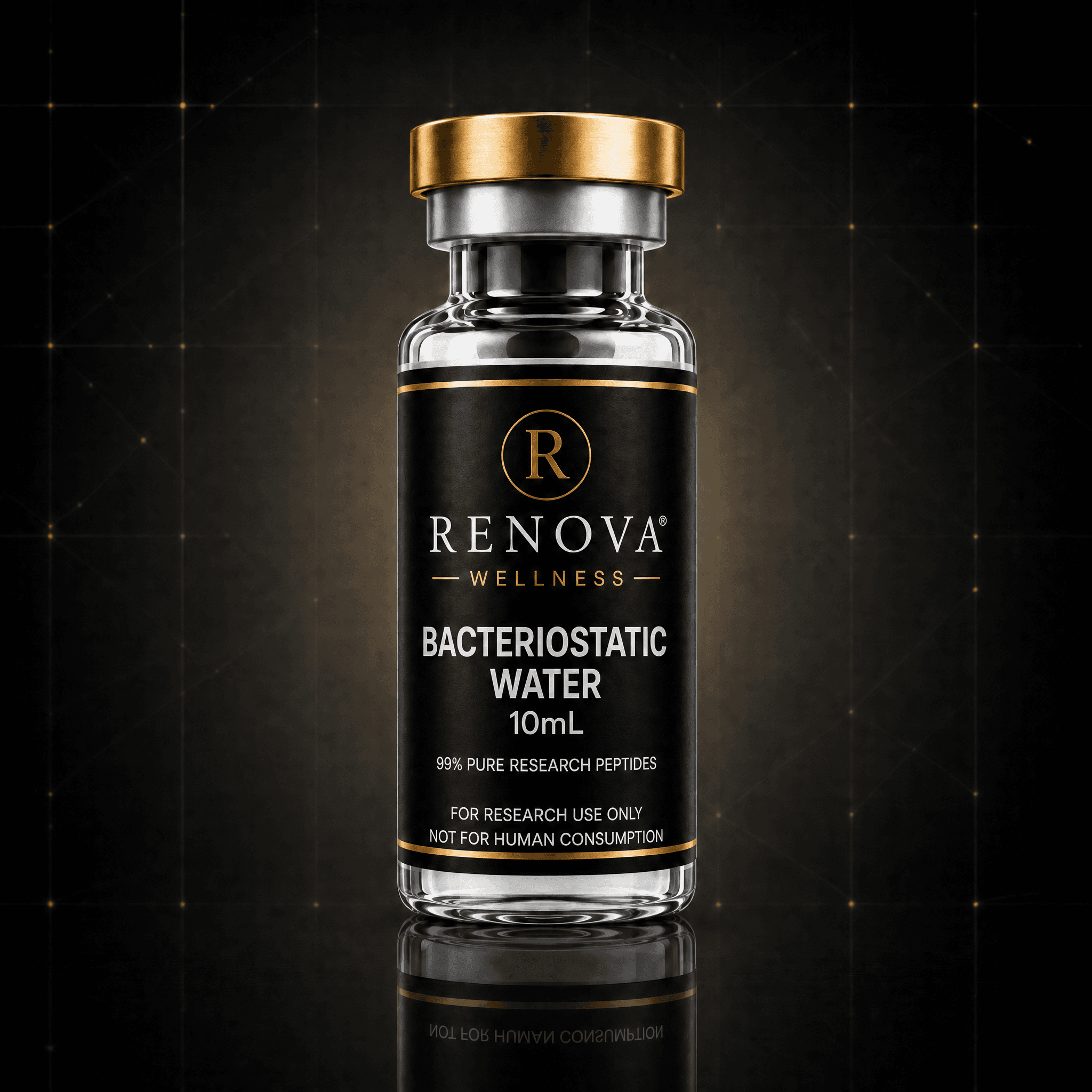
Bacteriostatic Water: What It Is and Why It's Used
Bacteriostatic water is the quiet companion to almost every research peptide — the diluent that turns a freeze-dried powder into a working solution. Here's what it is, how it differs from other waters, and why it's the standard choice, for research-handling reference only.
What is bacteriostatic water?
Bacteriostatic water is sterile water that contains about 0.9% benzyl alcohol, an additive that inhibits the growth of bacteria. The word bacteriostatic means "stops bacteria from multiplying" — as opposed to bactericidal, which means "kills bacteria." It's used to reconstitute lyophilized (freeze-dried) research peptides back into liquid form for laboratory handling.
Why not just plain sterile water?
Plain sterile water — sometimes labeled SWFI (sterile water for injection) — has no preservative. A solution made with it has no ongoing protection against microbial growth, so it's generally intended for single, prompt use. The benzyl alcohol in bacteriostatic water changes that: because it inhibits microbial growth, a reconstituted research solution can be stored and drawn from over a multi-use handling window rather than used all at once. That single difference is why bacteriostatic water is the default for research vials that will be accessed more than once.
| Bacteriostatic water | Sterile water (SWFI) | |
|---|---|---|
| Preservative | ~0.9% benzyl alcohol | None |
| Use window | Multi-use over a storage period | Single, prompt use |
| Typical research role | Standard peptide diluent | Occasional, when a preservative-free diluent is required |
How it's used in reconstitution
The diluent is added slowly, down the inside wall of the vial — not blasted directly onto the powder — and the vial is then swirled gently, never shaken, until the powder fully dissolves. Peptides are delicate, and vigorous agitation can degrade them. The reconstituted solution is then kept refrigerated (2–8°C) and protected from light. Our reconstitution guide covers the full technique, and the reconstitution calculator works out exactly how much water to add for a target concentration.
How much to add
The volume of bacteriostatic water you add determines the concentration of the final solution — more water means a more dilute solution, less water means a more concentrated one. That's a calculation, not a guess: enter the vial's mg and your target concentration into the calculator and it returns the volume to draw. Getting this right is what keeps research measurements consistent from vial to vial.
Storage and handling notes
- Keep both the sealed and opened diluent cool and clean, and use sterile technique when drawing from it.
- Store reconstituted peptide solutions refrigerated and light-protected; see the storage guide.
- Treat any "how long does it last" question as compound-specific — peptide stability in solution varies, so follow the handling notes for the specific material.
Pair it with every peptide order
Reconstitution requires a diluent, so bacteriostatic water belongs alongside almost every research peptide you source. It's inexpensive, shelf-stable, and the standard the whole field uses.
Questions
Frequently Asked
What is bacteriostatic water?
Bacteriostatic water is sterile water containing about 0.9% benzyl alcohol, a preservative that inhibits the growth of bacteria ('bacteriostatic' means it stops bacteria from multiplying). In research handling it's the standard diluent for reconstituting lyophilized peptides, because the preservative lets a solution be stored over a multi-use window.
What is the difference between bacteriostatic water and sterile water?
Plain sterile water (sometimes labeled SWFI) has no preservative, so a solution made with it should be used promptly. Bacteriostatic water adds ~0.9% benzyl alcohol, which inhibits microbial growth and allows a reconstituted solution to be stored and drawn from over a typical handling window — which is why it's preferred for multi-use research vials.
How long does reconstituted peptide last in bacteriostatic water?
Stability depends on the specific peptide, concentration, and storage, so treat any window as compound-specific rather than universal. In general, reconstituted solutions are kept refrigerated at 2–8°C and protected from light, and the benzyl alcohol in bacteriostatic water helps limit microbial growth over that period. Always follow the handling notes for the specific compound.
Related Compounds
Shop the Research
Compare
Related comparisons
Keep Reading
Related Research
For Research Use Only · Not For Human Consumption · Renova Wellness™