Handling
How to Store Research Peptides for Stability
Storing research peptides well comes down to three words: cold, dark, and dry. This guide covers the practical essentials for both the freeze-dried powder and the reconstituted (mixed) form — enough to handle vials correctly, without a chemistry lecture.
How long do research peptides last?
It depends mostly on the form. As a rule of thumb — and the handling window on a specific lot's certificate of analysis always takes precedence:
| Form | Store it | Realistic shelf life* |
|---|---|---|
| Lyophilized (dry powder) | Freezer, ~ -20°C, dark | A few months to a couple of years |
| Reconstituted (mixed with bac water) | Refrigerator, 2–8°C, dark | A few weeks to a few months |
*General ranges for handling reference only — not a potency guarantee. The lot's COA always wins. Try the interactive Storage & Shelf-Life Guide for a quick form-plus-condition lookup.
Dry (lyophilized) powder
Freeze-dried powder is the stable form — with almost no water present, it holds up well over the long term.1
- Freezer (~ -20°C) for long-term storage; a refrigerator is fine if you'll use it within a few weeks.
- Keep it dark and sealed in its original container.
- Let a cold vial warm to room temperature before opening — otherwise moisture condenses onto the powder, which is the one thing you're trying to avoid.
Reconstituted (liquid) form
Once mixed with bacteriostatic water, the clock speeds up — plan to use it within a few weeks to a few months.
- Refrigerate at 2–8°C. Don't leave a mixed vial sitting at room temperature.
- Keep it out of light — store it toward the back of the fridge, not in the door.
- Don't freeze a mixed vial unless a protocol specifically calls for it.
- The benzyl alcohol in bacteriostatic water holds off microbial growth, which is why a reconstituted vial lasts longer than one mixed with plain sterile water.
Planning volumes before you mix? Use the reconstitution calculator and the reconstitution guide.
The three things that shorten shelf life
Heat, light, and moisture — that's basically the whole story.2
| Threat | Why it matters | What to do |
|---|---|---|
| Heat | Speeds up breakdown | Freezer for powder, fridge for liquid; never leave at room temp |
| Light | Degrades the peptide over time | Keep in original packaging; back of the fridge |
| Moisture | The enemy of the dry powder | Keep sealed; warm before opening |
A few good habits
- Minimize freeze-thaw cycles. Repeated freezing and thawing is hard on peptides. If you'll draw on a stock over time, splitting it into smaller single-use portions means each is thawed only once.
- Label every vial with contents, concentration, and the date you reconstituted it — that's when the shelf-life clock starts for a liquid vial.
- Use clean, sterile technique. Add diluent slowly down the vial wall and swirl gently — never shake.
Signs something may be off
None of these is a potency test, but they're a reason to stop and check against the lot's documentation:
| What you see | Possible cause |
|---|---|
| Cloudiness or haze | Degradation or contamination |
| Floating particles | Precipitation or contamination |
| Color change (e.g. yellowing) | Chemical breakdown |
| Powder that won't fully dissolve | Handling or material issue |
When in doubt, defer to the appearance notes and handling window on the COA.
Common mistakes to avoid
- Storing a reconstituted vial in the freezer by default.
- Opening a frozen powder vial before it warms to room temperature.
- Keeping vials in the fridge door (the warmest, most variable spot).
- Shaking to speed up dissolution.
- Leaving vials unlabeled and undated.
Pair every order with a diluent
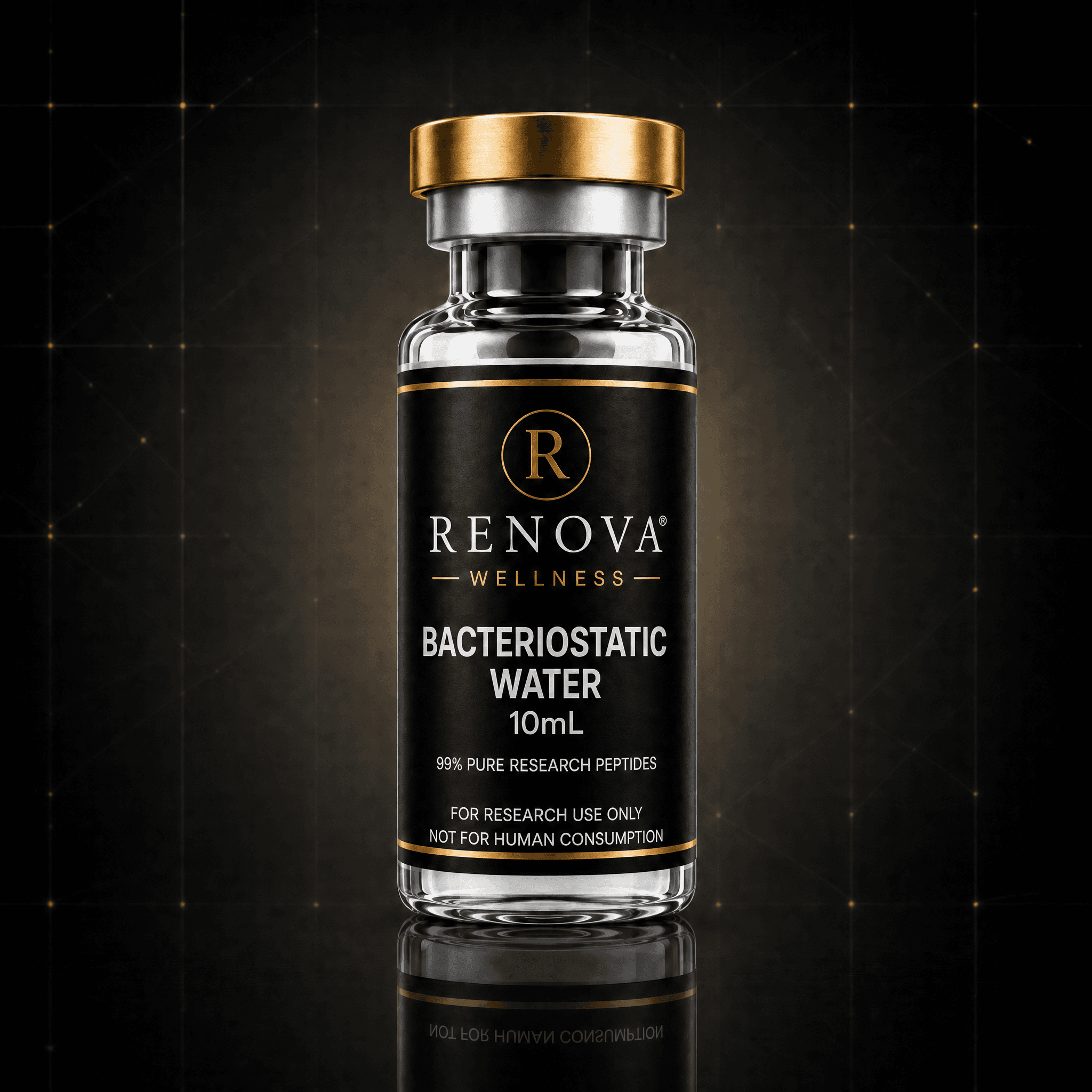
Storage and reconstitution go together — add bacteriostatic water to your order so a powder is never opened without a diluent ready, and check conditions anytime in the Storage & Shelf-Life Guide.
References
References
Related Compounds
Shop the Research
Compare
Related comparisons
Keep Reading
Related Research
For Research Use Only · Not For Human Consumption · Renova Wellness™