Handling
Understanding Peptide Reconstitution (Research Context)
Most research peptides arrive as a lyophilized (freeze-dried) powder, because dry peptide is far more stable in storage and transit than peptide in solution. Before any laboratory study, that powder is reconstituted — returned to liquid form. This article covers the general concept and technique, for research-handling reference only.
What "reconstitution" means
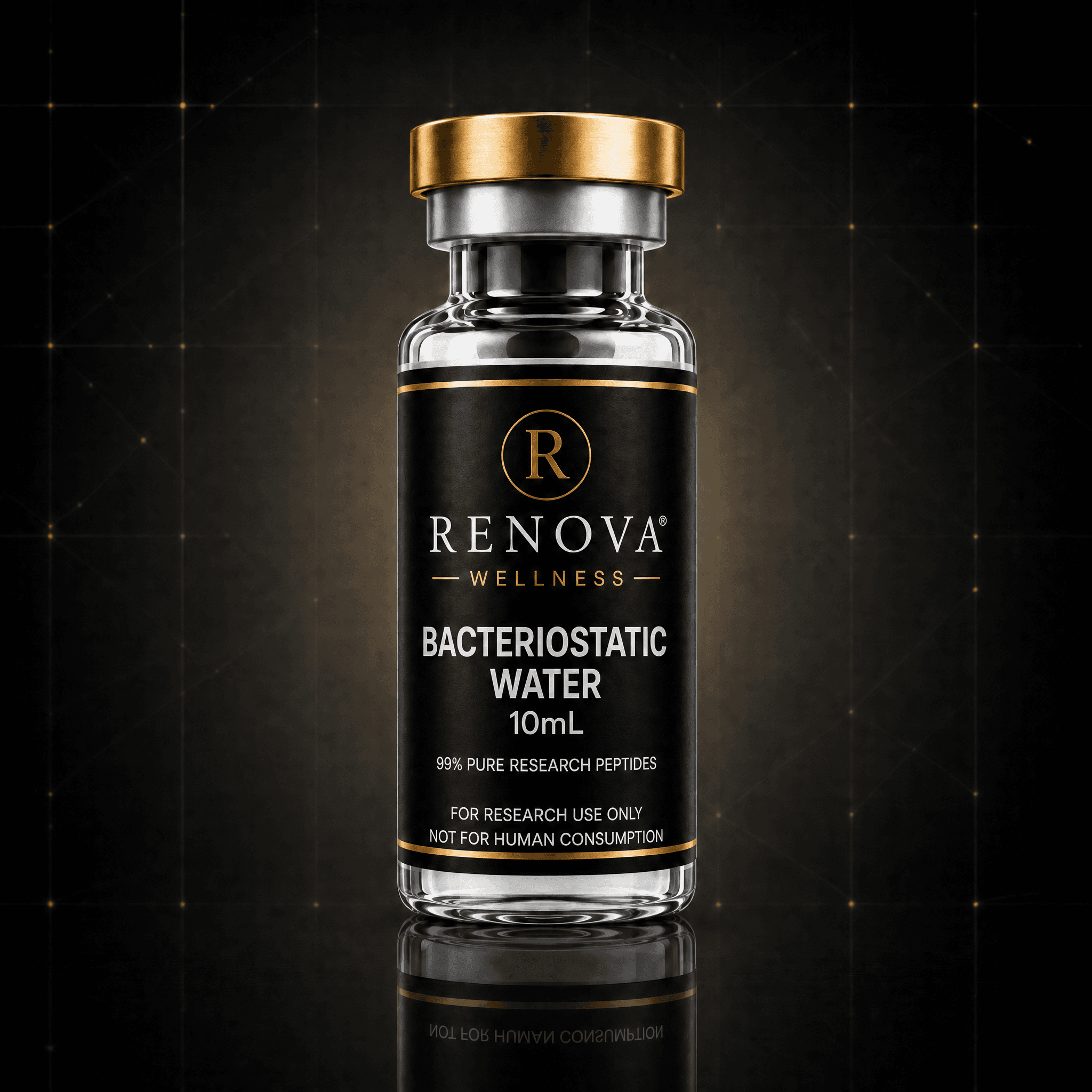
Reconstitution is simply returning a freeze-dried powder to liquid form by adding a sterile diluent — most commonly bacteriostatic water, sterile water with about 0.9% benzyl alcohol that inhibits microbial growth over a multi-use window. Once dissolved, the peptide is in a solution you can measure and work with at a known concentration.
Concentration is the whole point
The reason reconstitution technique matters is that it sets concentration, and concentration drives every measurement downstream. The relationship is simple:
Add 10 mg of peptide to 2 mL of bacteriostatic water and you have a 5 mg/mL solution. Use 1 mL instead and the same vial becomes 10 mg/mL. Neither is "right" — it depends on the concentration your protocol needs — but the volume you add is a deliberate calculation, not a pour. Our reconstitution calculator does the arithmetic for any vial size and target concentration, and the cost-per-mg calculator helps you compare vials on a true basis.
General handling principles (lab context)
- Use sterile technique and clean materials throughout.
- Add the diluent slowly, down the inside wall of the vial — not directly onto the powder — to avoid foaming and denaturation.
- Swirl gently; never shake. Peptides are fragile; vigorous agitation can degrade them. Let the vial sit and swirl periodically if needed.
- Allow the powder to dissolve fully before drawing any solution — a partially dissolved vial gives an inconsistent concentration.
- Store the reconstituted solution refrigerated (2–8°C) and protected from light. See the storage guide for cold-chain details.
A worked example
Suppose you have a 10 mg vial and your protocol calls for a 2 mg/mL working solution:
- Volume needed = 10 mg ÷ 2 mg/mL = 5 mL of bacteriostatic water.
- Add the 5 mL slowly down the vial wall.
- Swirl gently until fully dissolved.
- Refrigerate, light-protected.
The calculator runs this in reverse too — tell it the volume you added and it reports the resulting concentration.
Common mistakes to avoid
- Shaking the vial to speed dissolution (degrades peptide).
- Guessing the water volume instead of calculating it (inconsistent concentration).
- Adding diluent directly onto the powder with force (foaming).
- Leaving solution at room temperature or in light for extended periods.
Pair every order with a diluent
Reconstitution requires a suitable diluent, so bacteriostatic water belongs alongside almost every peptide order. Add it up front so a new vial is ready to work with the moment it arrives.
Questions
Frequently Asked
What does it mean to reconstitute a peptide?
Reconstitution means returning a lyophilized (freeze-dried) peptide powder to liquid form by adding a sterile diluent — most commonly bacteriostatic water. Research peptides are shipped as powder for stability and reconstituted in the lab before study.
How do you calculate peptide concentration when reconstituting?
Concentration equals the amount of peptide divided by the volume of diluent added. For example, 10 mg of peptide reconstituted with 2 mL of bacteriostatic water gives 5 mg/mL. Because the target concentration determines how much water to add, it's easiest to use a reconstitution calculator: enter the vial's mg and your desired concentration and it returns the volume.
Should you shake a peptide vial to mix it?
No. Add the diluent slowly down the inside wall of the vial and swirl gently until dissolved — never shake. Peptides are delicate, and vigorous agitation can degrade them. Allow the powder to dissolve fully, then store the solution refrigerated and protected from light.
Related Compounds
Shop the Research
Compare
Related comparisons
Keep Reading
Related Research
For Research Use Only · Not For Human Consumption · Renova Wellness™