Mechanisms
GLP-1 Agonists: How Incretin Analogs Work (Mechanism Guide)
The GLP-1 class is the reason metabolic peptides became one of the most discussed areas in research. This guide explains the underlying biology — incretins, the three receptors, and why compounds keep adding receptors. For laboratory and educational reference only.
What are incretins?
"Incretins" are intestinal hormones released in response to food. They coordinate the body's metabolic response — insulin secretion, appetite signaling, gastric emptying, and energy balance. The two principal incretins in this research class are GLP-1 and GIP; the newest compounds also target the glucagon receptor.
The three receptors
GLP-1 (glucagon-like peptide-1)
The most studied arm: satiety signaling in the central nervous system, slowed gastric emptying, and glucose-dependent insulin secretion.1
GIP (glucose-dependent insulinotropic polypeptide)
Studied as a potentiator of insulin response and a modulator of adipose tissue; combined with GLP-1 it is also discussed for tolerability.
Glucagon (GCGR)
The newest axis. At the liver it is studied for mobilizing fat; systemically it is studied for increasing energy expenditure — a different lever than appetite suppression.
Mono → dual → triple
The defining trend is adding receptors to amplify the metabolic effect:
| Step | Example | Receptors |
|---|---|---|
| Mono | Semaglutide | GLP-1 |
| Dual | Tirzepatide | GLP-1 + GIP |
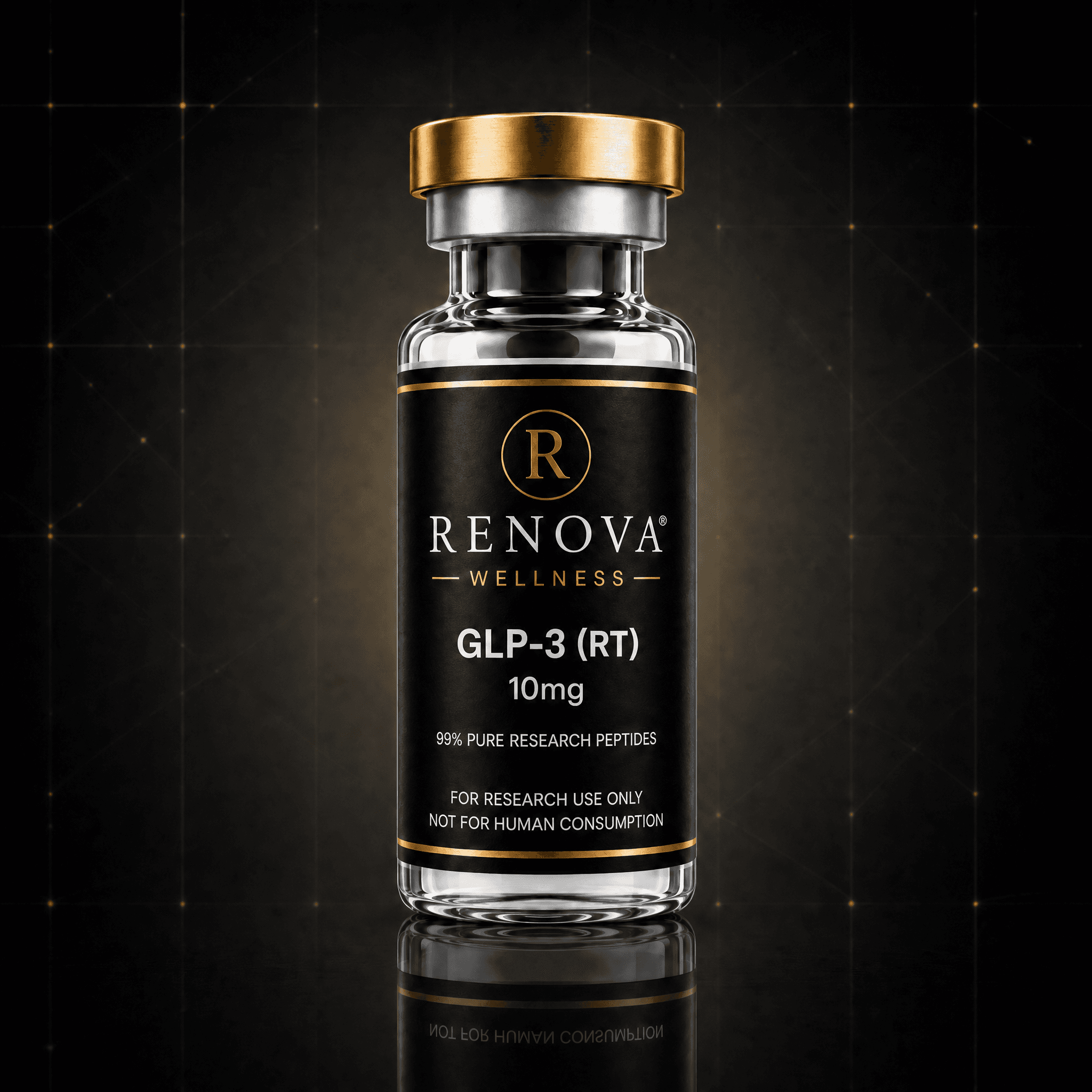
| Triple | Retatrutide | GLP-1 + GIP + glucagon |
Read the individual compound overviews for Tirzepatide and Retatrutide, and the full category in Metabolic Research Peptides.
Why it matters for research
Understanding which receptors a compound hits is the key to reading the whole field — it explains why the literature compares compounds by receptor coverage, and why combination studies pair incretin agonists with compounds that act on unrelated pathways (mitochondrial, growth-hormone axis).
Verified material
Renova compounds are synthesized and lyophilized in the USA, third-party tested, and ship with a per-batch COA. See How to Read a Peptide COA.
References
-
Drucker DJ. Mechanisms of Action and Therapeutic Application of Glucagon-like Peptide-1. Cell Metab. 2018;27(4):740–756. ↩
Questions
Frequently Asked
What are incretins?
Incretins are gut-derived hormones released in response to food that help coordinate insulin secretion, appetite, and energy balance. The two principal incretins studied in this class are GLP-1 and GIP; glucagon is a related hormone targeted by the newest triple agonists.
What does GLP-1 do?
In the research literature, GLP-1 receptor activation is studied for promoting satiety, slowing gastric emptying, and stimulating glucose-dependent insulin secretion — meaning insulin release is tied to elevated glucose, which is studied as a low-hypoglycemia-risk profile.
Why are there mono, dual, and triple agonists?
Each additional receptor adds a metabolic lever. Mono agonists hit GLP-1 only; dual agonists add GIP; triple agonists add glucagon, which is studied for raising energy expenditure. The trend is adding axes to amplify the metabolic effect.
Are GLP-1 research peptides the same as prescription drugs?
No. Renova sells these compounds strictly as research materials — not as drugs, supplements, or therapies, and not for human or animal use — even when an approved pharmaceutical formulation of the same molecule exists.
Related Compounds
Shop the Research

Compare
Related comparisons
Keep Reading
Related Research
For Research Use Only · Not For Human Consumption · Renova Wellness™