Comparisons
CJC-1295 vs Ipamorelin: A Research Comparison
CJC-1295 and Ipamorelin are two of the most referenced growth-hormone-secretagogue peptides in research, and they're often studied together. Here's how they differ — for laboratory reference only.
Two different mechanisms
- CJC-1295 is a GHRH analog — it is studied in relation to growth-hormone-releasing-hormone signaling. In healthy-adult research, CJC-1295 was reported to produce prolonged increases in GH and IGF-1 secretion,1 and follow-up work found GH secretion remained pulsatile even under continuous stimulation.2 It exists with and without DAC (Drug Affinity Complex), a modification research describes as extending half-life and duration of action.
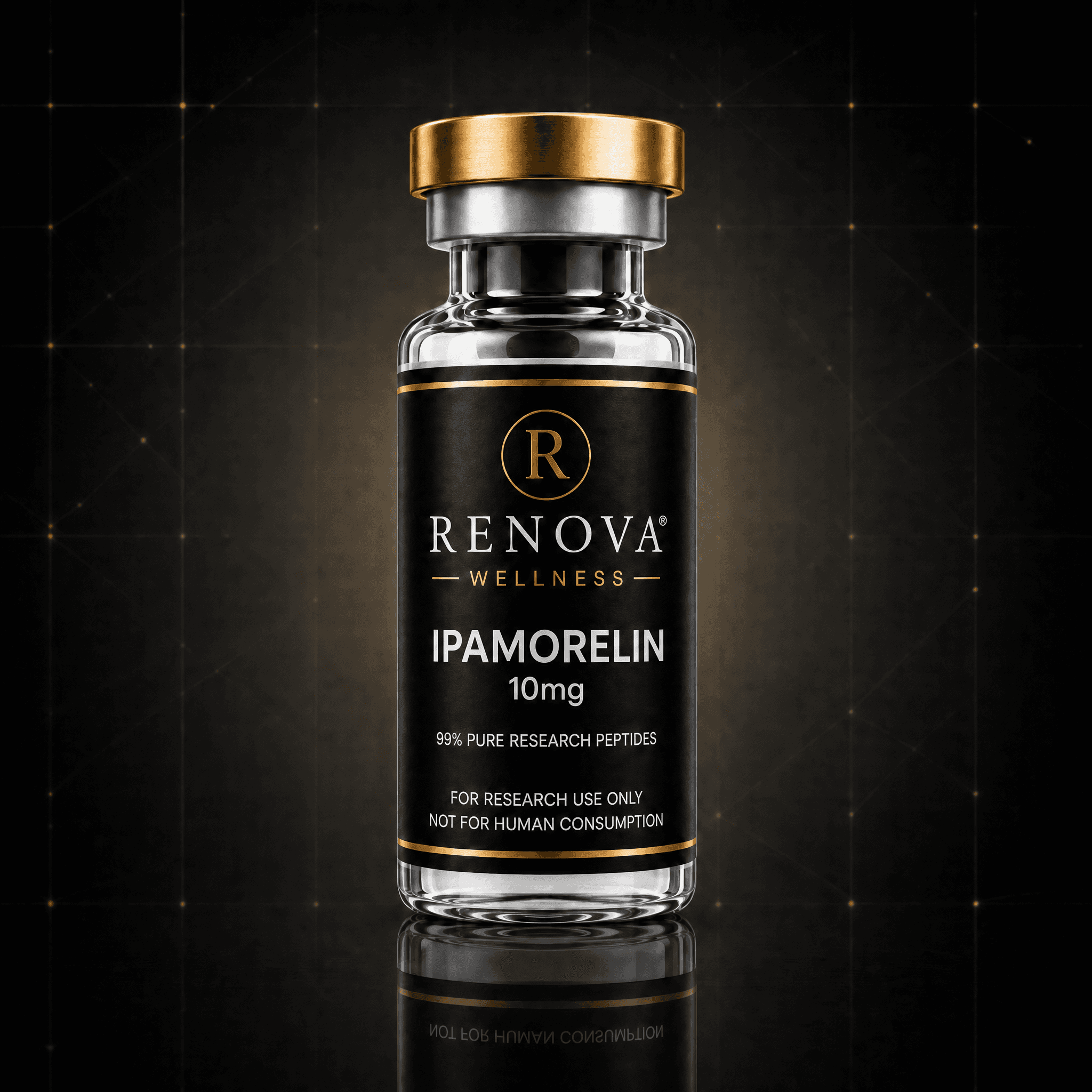
- Ipamorelin is a growth-hormone secretagogue / ghrelin-receptor agonist (GHRP-class) — it acts on a different receptor pathway. It was characterized in the literature as the first selective GH secretagogue, releasing GH without the concurrent ACTH/cortisol or prolactin rises seen with earlier GHRPs.3
Why they're often combined
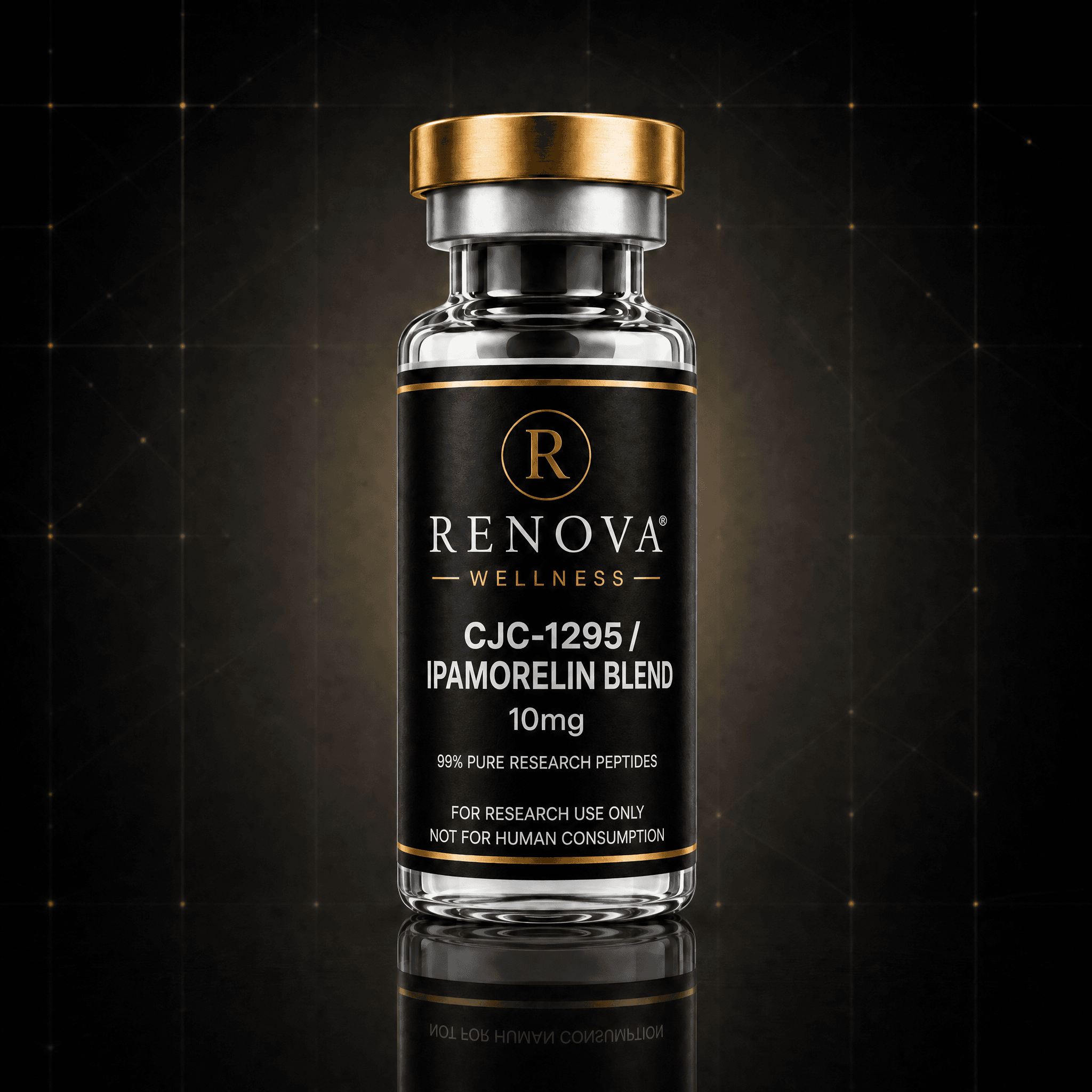
Because the two act on complementary pathways in research models, they are frequently examined together — the basis for the combined CJC-1295 / Ipamorelin blend.
At a glance
| CJC-1295 | Ipamorelin | |
|---|---|---|
| Class | GHRH analog | GH secretagogue (GHRP) |
| Variants | With / without DAC | Single form |
| Studied | GHRH-axis research | Ghrelin-receptor research |
What the research has examined
Because the two act on complementary axes, they are studied both separately and together:
- CJC-1295 research has mapped its effect on the GH/IGF-1 axis in normal adults, including serum-protein-profile changes that accompany axis activation.4 The persistence of pulsatile GH release under CJC-1295 is a recurring point of interest, since pulsatility is thought to matter for downstream signaling.2
- Ipamorelin has been characterized pharmacokinetically alongside other secretagogues,5 and studied in models beyond GH release itself — for example, a rodent model of postoperative ileus examined it as a ghrelin mimetic affecting gastrointestinal motility.6
All of these are preclinical or early-clinical research findings, presented for laboratory reference only.
The DAC difference (CJC-1295)
The "DAC" in CJC-1295 refers to a Drug Affinity Complex — a maleimidopropionic-acid group that binds the peptide covalently to circulating albumin after administration, sharply lengthening how long it persists. The No-DAC form (often called Mod GRF 1-29) lacks this and is correspondingly shorter-acting. Which form a study uses materially changes its pharmacokinetics, so it is worth checking when reading the literature.
Why pulsatility matters in the research
A recurring theme in the CJC-1295 literature is that growth hormone is normally released in pulses, and that a long-acting GHRH analog could in principle flatten those pulses into a continuous signal. The finding that GH secretion remained pulsatile even under continuous CJC-1295 stimulation is therefore studied closely,2 because the pattern of release — not just the total amount — is thought to influence downstream IGF-1 and tissue signaling. This is one reason researchers pair a GHRH analog (CJC-1295) with a ghrelin-receptor secretagogue (Ipamorelin): the two engage the GH axis through different, potentially complementary, timing mechanisms.
Choosing a form for research
CJC-1295 is offered No-DAC (short-acting, sometimes called Mod GRF 1-29) and, historically, with DAC (long-acting via albumin binding). Renova's catalog pairs CJC-1295 No DAC with Ipamorelin, plus a pre-combined blend. Which form a study uses changes its pharmacokinetics substantially, so the form should always be specified when reporting or reproducing research.
What the research does not establish
The human data are limited and mostly early-phase; neither compound is an approved therapy, and Renova makes no human-use or performance claims. These references are provided so researchers can consult the primary literature directly. For the wider GH-axis picture, see What Is Tesamorelin? — another GHRH analog.
Verified quality
All three options — CJC-1295 No DAC, Ipamorelin, and the blend — publish per-batch third-party COAs. Confirm your lot with Verify Your Vial.
Shop GH-secretagogue research peptides →
References
-
Teichman SL, et al. Prolonged stimulation of growth hormone (GH) and insulin-like growth factor I secretion by CJC-1295, a long-acting analog of GH-releasing hormone, in healthy adults. J Clin Endocrinol Metab. 2006;91(3):799–805. PMID: 16352683. ↩
-
Ionescu M, Frohman LA. Pulsatile secretion of growth hormone (GH) persists during continuous stimulation by CJC-1295, a long-acting GH-releasing hormone analog. J Clin Endocrinol Metab. 2006;91(12):4792–4797. PMID: 17018654. ↩ ↩2 ↩3
-
Raun K, et al. Ipamorelin, the first selective growth hormone secretagogue. Eur J Endocrinol. 1998;139(5):552–561. PMID: 9849822. ↩
-
Sackmann-Sala L, et al. Activation of the GH/IGF-1 axis by CJC-1295, a long-acting GHRH analog, results in serum protein profile changes in normal adult subjects. Growth Horm IGF Res. 2009;19(6):471–477. PMID: 19386527. ↩
-
Johansen PB, et al. Pharmacokinetic evaluation of ipamorelin and other peptidyl growth hormone secretagogues with emphasis on nasal absorption. Xenobiotica. 1998;28(11):1083–1092. PMID: 9879640. ↩
-
Venkova K, et al. Efficacy of ipamorelin, a novel ghrelin mimetic, in a rodent model of postoperative ileus. J Pharmacol Exp Ther. 2009;329(3):1110–1116. PMID: 19289567. ↩
Related Compounds
Shop the Research
Compare
Related comparisons
Keep Reading
Related Research
For Research Use Only · Not For Human Consumption · Renova Wellness™