Comparisons
The Wolverine Blend: BPC-157 + TB-500 in Research
The "Wolverine" blend pairs two of the most studied tissue-repair research peptides — BPC-157 and TB-500 — in a single research product. Here's the rationale, for laboratory reference only.
What's in it
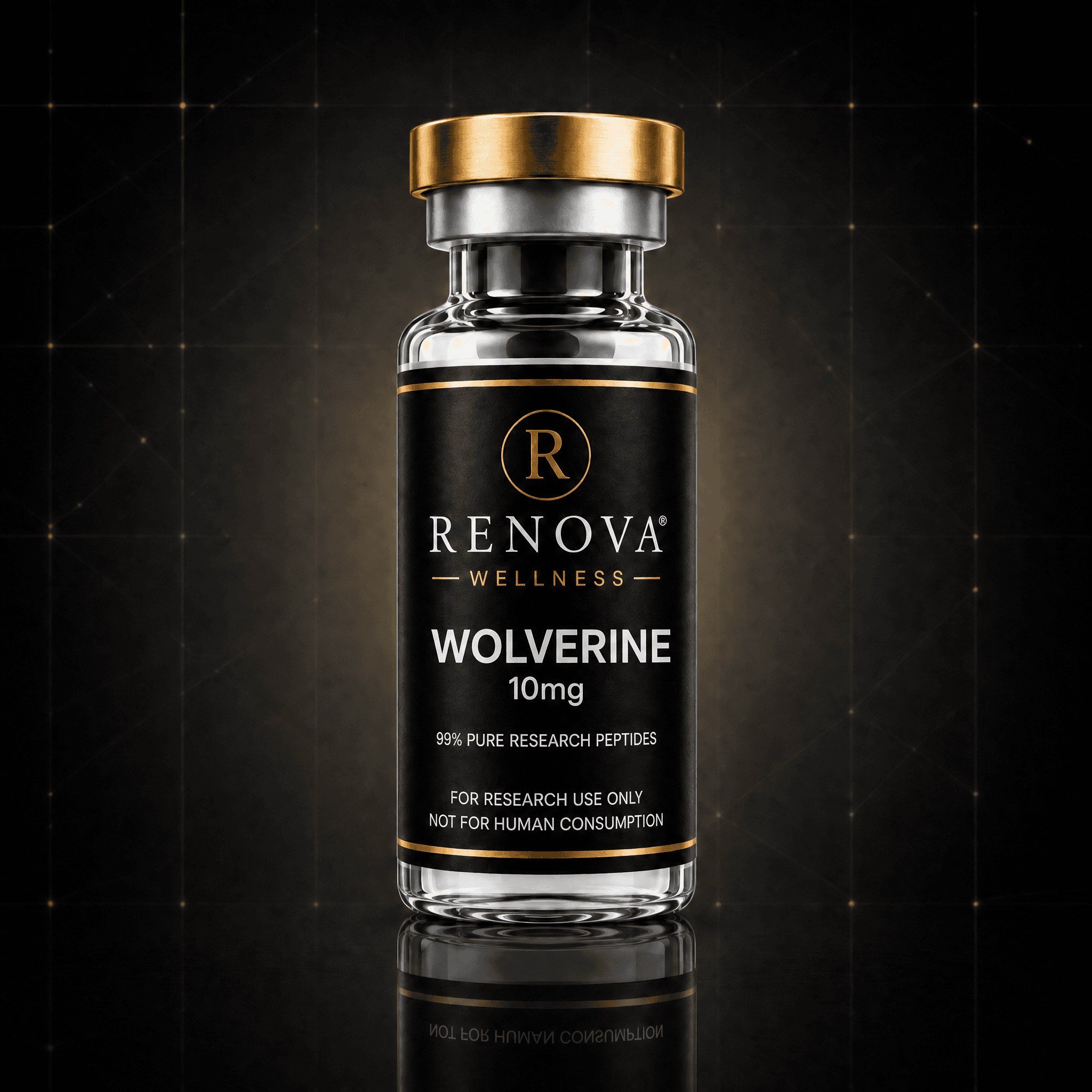
The Wolverine research blend contains BPC-157 and TB-500. Both are frequently referenced in tissue-repair research, and each has been studied in relation to complementary repair-associated pathways — BPC-157 in localized tissue and angiogenesis research, TB-500 in cell-migration research.
Why combine them in research
Because the two are associated with different but related mechanisms in preclinical work, researchers often examine them together. The combined blend reflects that common pairing. For a direct comparison, see BPC-157 vs TB-500.
What the research on each component shows
The published literature studies BPC-157 and TB-500 individually, not the Wolverine combination — so the pairing's rationale is a composite of two separate research threads:
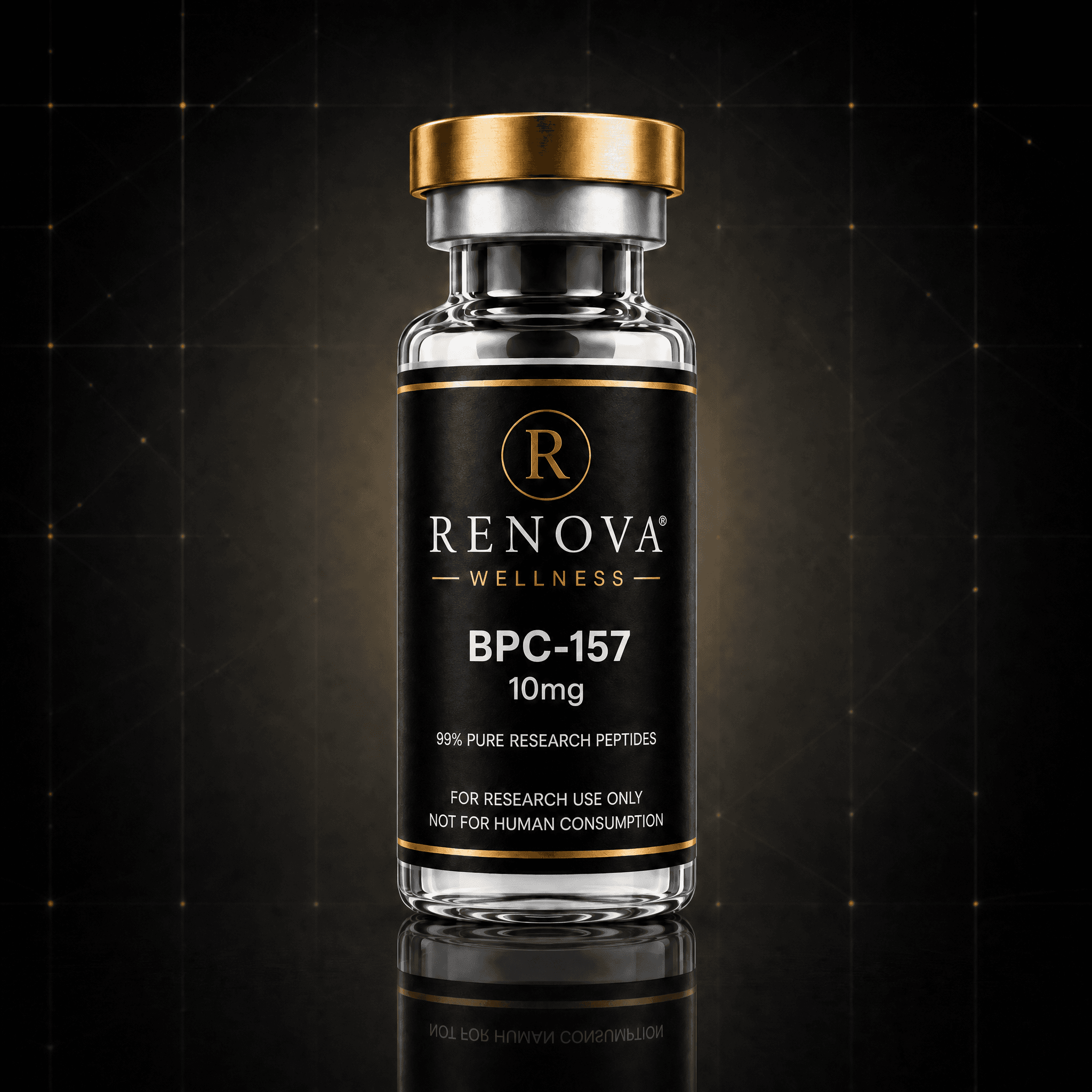
- BPC-157 — a gastric peptide studied in animal models for tendon healing1 and pro-angiogenic effects,2 with muscle- and tendon-model work describing modulated angiogenesis rather than brute-force stimulation.3
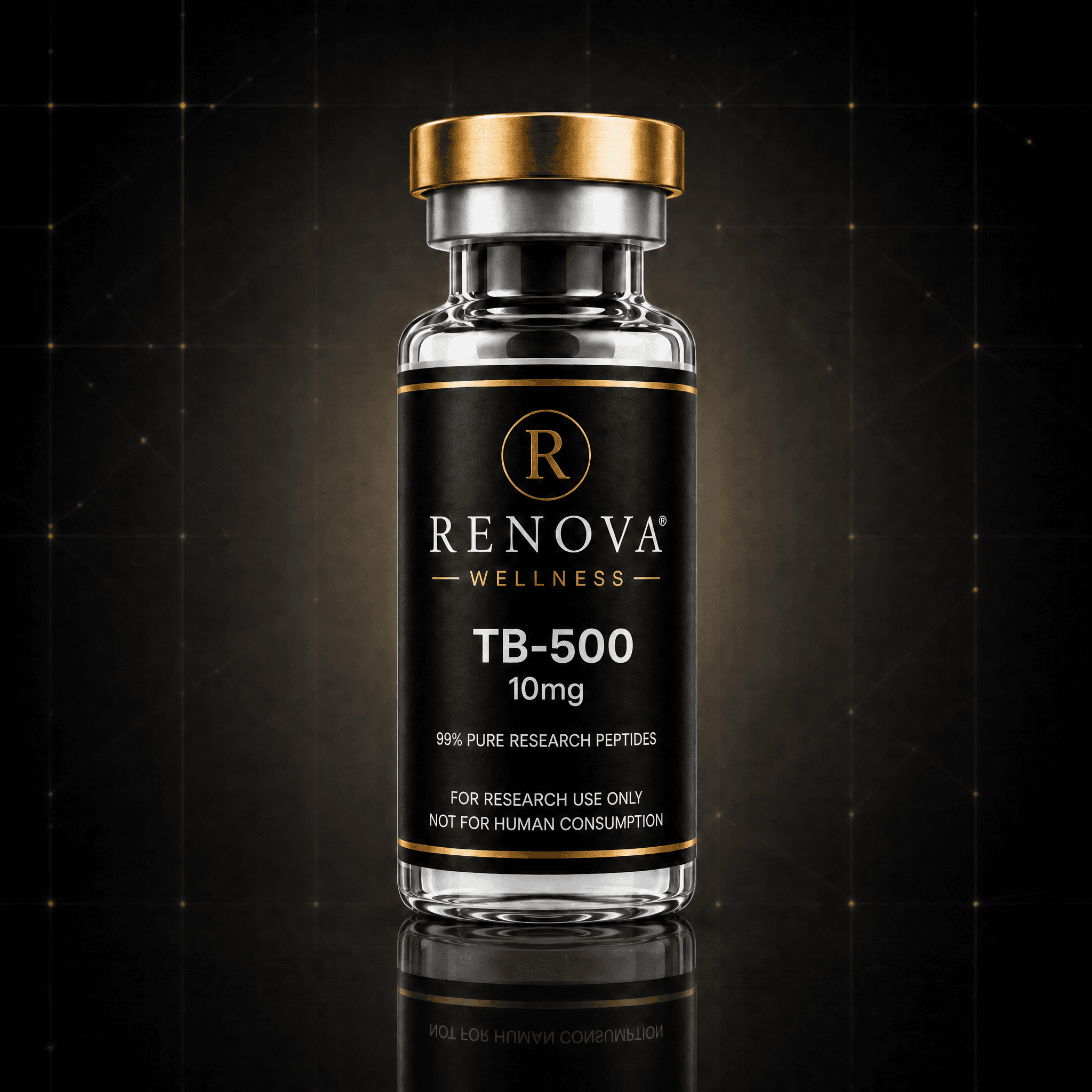
- TB-500 — the thymosin-β4 fragment, whose classic finding is accelerated reepithelialization in a wound model,4 and which is described more broadly as a multifunctional tissue-repair and regeneration peptide.5
The idea behind pairing them is that BPC-157 is studied around localized tissue and angiogenesis pathways while TB-500 is studied around actin/cell-migration pathways — complementary angles on repair.
An important caveat about blends
Because the research examines each compound separately, there is no controlled study of the Wolverine combination itself — the rationale is inferred from the component literature, not demonstrated for the mixture. Renova makes no human-use or performance claims; the blend is a single research preparation with a per-batch COA covering its contents.
The recovery-research rationale
The reason BPC-157 and TB-500 are paired so often comes down to non-overlapping mechanisms. BPC-157's preclinical literature centers on localized tissue repair and modulated angiogenesis — how a healing site organizes and vascularizes. TB-500 (thymosin β4) centers on actin regulation and cell migration — how cells move into and remodel a repair site. Investigators interested in the full arc of tissue repair therefore study them as complementary tools. That said, "complementary in theory" is not "synergistic in fact," and the caveat above stands: the pairing's rationale is drawn from two separate literatures, not from a controlled study of the blend.
Handling the blend in the lab
Supplied as a single lyophilized preparation, the Wolverine blend is reconstituted once with bacteriostatic water and refrigerated (2–8°C) after reconstitution — not mixed from two separate vials. Its per-batch Certificate of Analysis covers both components. For concentration math and cold-chain handling, see our reconstitution and storage guides. This describes laboratory handling of a research-only material.
BPC-157 and TB-500 at a glance
| BPC-157 | TB-500 | |
|---|---|---|
| Type | Synthetic gastric pentadecapeptide (15 aa) | Fragment of thymosin β4 (43-aa protein) |
| Studied around | Localized tissue repair, modulated angiogenesis | Actin regulation, cell migration |
| Representative finding | Tendon-healing and pro-angiogenic models12 | Accelerated reepithelialization in a wound model4 |
| Evidence base | Preclinical (cell + animal) | Preclinical (cell + animal) |
Neither has robust human clinical-trial evidence; the table summarizes where each compound's research literature concentrates, not clinical outcomes. It is also why the two rarely compete in the literature — they are studied as different tools for different stages of the same repair process, which is precisely the logic behind pairing them. For the full side-by-side, see BPC-157 vs TB-500.
Why researchers use a pre-made blend
Combining two peptides by hand introduces variables — measuring each, fixing the ratio, and repeated freeze-thaw of separate vials — that can undermine reproducibility. A pre-made, single-vial blend standardizes the ratio across experiments and reduces handling steps: one reconstitution, one Certificate of Analysis. The trade-off is flexibility — a fixed blend cannot be re-balanced the way two separate vials can — so researchers who need to vary one component independently still reach for the individual compounds.
Verified quality on both components
The Wolverine blend ships with a per-batch third-party COA covering its contents. Confirm your lot with Verify Your Vial.
References
-
Chang C-H, et al. The promoting effect of pentadecapeptide BPC 157 on tendon healing. J Appl Physiol. 2011. PMID: 21030672. ↩ ↩2
-
Hsieh M-J, et al. Therapeutic potential of pro-angiogenic BPC157. J Mol Med. 2017. PMID: 27847966. ↩ ↩2
-
Brcic L, et al. Modulatory effect of gastric pentadecapeptide BPC 157 on angiogenesis in muscle and tendon healing. J Physiol Pharmacol. 2009;60 Suppl 7:191–196. PMID: 20388964. ↩
-
Malinda KM, et al. Thymosin beta4 accelerates wound healing. J Invest Dermatol. 1999;113(3):364–368. PMID: 10469335. ↩ ↩2
-
Philp D, Kleinman HK. Animal studies with thymosin beta, a multifunctional tissue repair and regeneration peptide. Ann N Y Acad Sci. 2010;1194:81–86. PMID: 20536453. ↩
Questions
Frequently Asked
What is in the Wolverine blend?
The Wolverine research blend contains two peptides: BPC-157 (studied in localized tissue-repair and angiogenesis research) and TB-500 (studied in actin/cell-migration research). It is supplied as a single lyophilized preparation with a per-batch third-party COA covering both components.
Why are BPC-157 and TB-500 combined?
Because their preclinical literatures center on non-overlapping mechanisms — BPC-157 on localized tissue repair and modulated angiogenesis, TB-500 on actin regulation and cell migration. Researchers interested in the full arc of tissue repair study them as complementary tools.
Is the Wolverine combination itself studied?
No. The published research examines BPC-157 and TB-500 separately; there is no controlled study of the combination itself. The pairing's rationale is inferred from the two component literatures, not demonstrated for the mixture. Renova makes no efficacy or performance claims.
How is the Wolverine blend supplied and stored?
As a single lyophilized (freeze-dried) preparation, reconstituted once with bacteriostatic water for laboratory use and refrigerated (2–8°C) afterward. Every lot ships with a per-batch third-party COA.
Related Compounds
Shop the Research
Compare
Related comparisons
Keep Reading
Related Research
For Research Use Only · Not For Human Consumption · Renova Wellness™