Compound Overviews
AHK-Cu (Copper Tripeptide-3): Copper-Binding Peptide — Research Overview
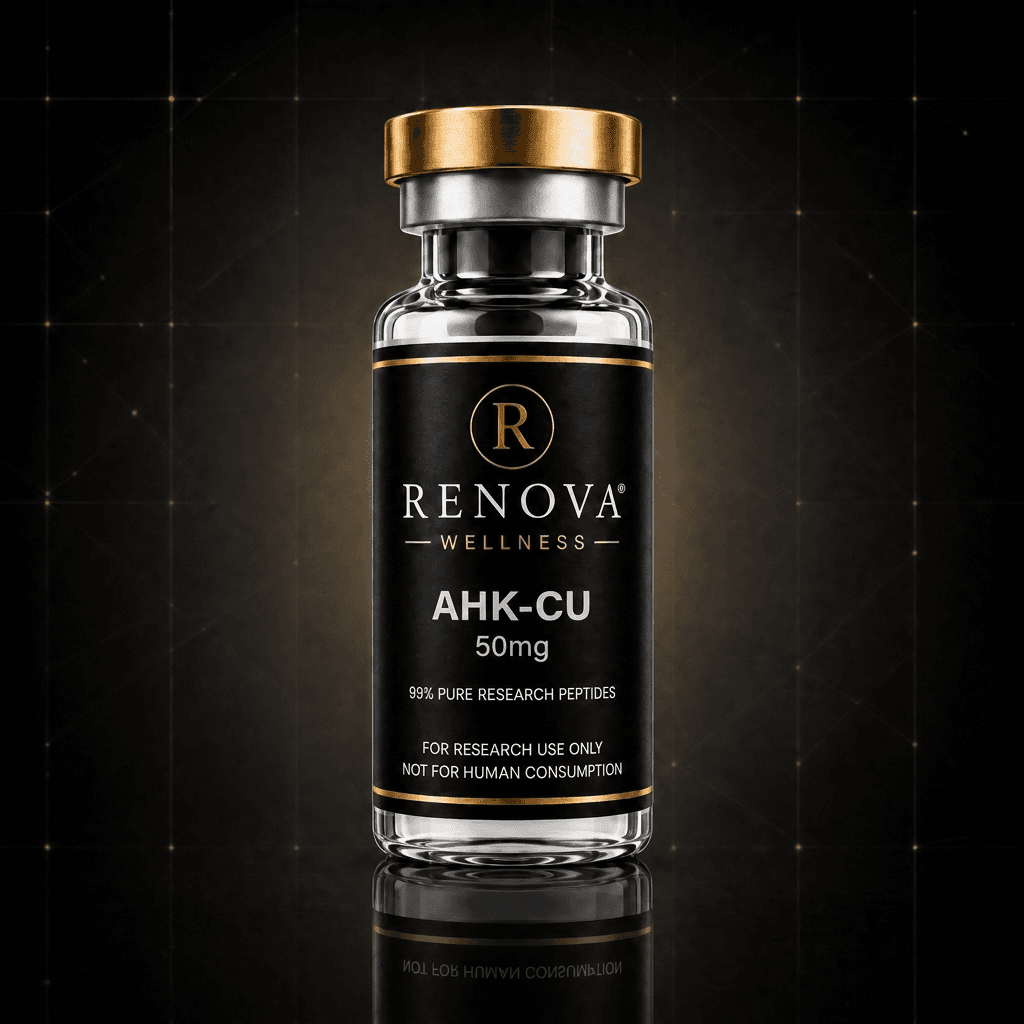
AHK-Cu is a small copper-carrying tripeptide studied in preclinical skin and hair-follicle research, and frequently compared with its better-known relative GHK-Cu. This overview is for laboratory and educational reference only.
What is AHK-Cu?
AHK-Cu, also designated Copper Tripeptide-3, is a copper-binding peptide made of three amino acids — alanine-histidine-lysine (Ala-His-Lys) — complexed with a copper ion. The histidine and terminal residues provide the coordination chemistry that lets the tripeptide carry copper, a defining feature of the broader copper-peptide class of which GHK-Cu is the most extensively characterized member.1
| Property | Detail |
|---|---|
| Type | Copper-binding tripeptide |
| Sequence | Ala-His-Lys (AHK) + Cu²⁺ |
| Also known as | Copper Tripeptide-3 |
| CAS number | 682809-81-0 |
As a short synthetic peptide-copper complex, AHK-Cu is produced by solid-phase synthesis followed by copper complexation. The tripeptide backbone is short enough that its behavior is dominated by the copper it coordinates: histidine's imidazole side chain is the principal copper-coordinating residue in this class, and the resulting complex is what carries the metal into the signaling environment studied in research. Because the metal is central to the observed activity of the class, these peptides are almost always studied as complexes rather than as the bare tripeptides.1 Its low molecular weight places it among the smallest signaling peptides in this catalog.
What research has examined
The most directly relevant AHK-Cu study evaluated the complex in human hair-follicle and dermal papilla models. In that work, AHK-Cu (at picomolar-to-nanomolar concentrations) was reported to stimulate elongation of human hair follicles ex vivo and proliferation of cultured dermal papilla cells, alongside increased vascular endothelial growth factor (VEGF) production and a shift in apoptosis-related markers in those cells.2 This is the primary line of evidence that anchors AHK-Cu to hair-follicle-dermal-papilla biology.
Direct AHK-Cu literature is comparatively thin, so mechanism is most often read through the wider copper-tripeptide and GHK-Cu literature, which shares the metal-carrying architecture:
- Extracellular-matrix (ECM) signaling. Copper-binding tripeptides are studied as copper carriers that participate in ECM remodeling associated with skin. In fibroblast cultures, the GHK-Cu complex stimulated collagen synthesis at very low concentrations through a copper-dependent mechanism.3
- Tissue-remodeling framing. Reviews of the human GHK tripeptide describe it as a signal in the remodeling phase that follows the initial stage of wound healing, coordinating matrix turnover rather than acting on a single target.4
- Gene-level "modulator" hypotheses. More recent genome-level analyses summarize the copper-peptide class as associated with a broad set of regenerative and protective pathways, framing these peptides as modulators of many cellular programs.1
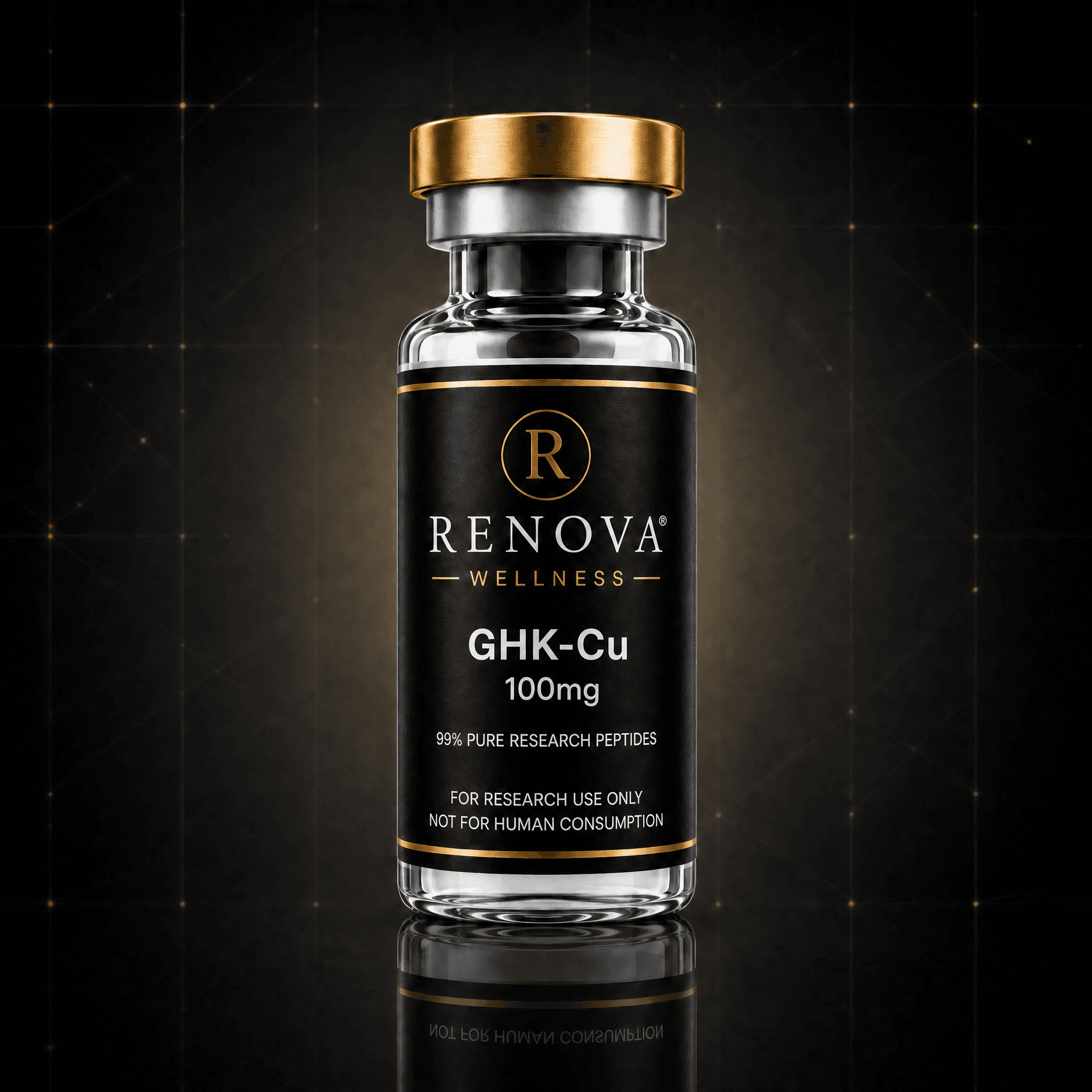
Comparative study of AHK-Cu and GHK-Cu is a recurring theme: because they share the metal-carrying mechanism but present different tripeptide sequences, researchers use them side by side to probe how sequence influences the signaling associated with skin and follicle models.
Angiogenesis and VEGF context
One thread that connects copper peptides to angiogenesis research is copper's association with VEGF. In the AHK-Cu hair study, the complex raised VEGF production in dermal fibroblasts,2 and in a separate primary study copper itself induced VEGF expression in a wound-healing model.5 These are cell-culture and animal findings about a signaling association, presented for scientific reference only — not evidence of any angiogenic effect in humans.
Research models
Preclinical and laboratory studies relevant to AHK-Cu have examined:
- Hair-follicle biology — ex vivo human follicle culture and cultured dermal papilla cells.2
- Dermatology / ECM — skin models and matrix-associated signaling drawn largely from the copper-tripeptide class.43
- Angiogenesis markers — VEGF expression in copper-peptide and copper wound-healing models.25
- Comparative peptide chemistry — side-by-side study with GHK-Cu and related copper peptides.1
These are strictly laboratory and preclinical research contexts, not established or approved uses. Results in cell and tissue models characterize the peptide's chemistry and signaling associations; they do not translate to any human or animal application and are not evidence of any cosmetic or therapeutic outcome.
How it's supplied
Renova supplies AHK-Cu as a lyophilized powder. For laboratory work it is reconstituted with bacteriostatic water, then kept refrigerated at 2–8°C. Every unit ships with a per-batch third-party COA.
See Understanding Peptide Reconstitution and How to Store Research Peptides for general handling references, and our reconstitution glossary entry for the underlying calculations. Copper-peptide complexes carry a characteristic blue-to-teal color in solution, which is expected for this class — but color is only a rough visual cue, not a substitute for documented identity.
Purity & verification
Renova material is third-party tested, with identity and purity documented on a per-batch certificate of analysis (HPLC plus mass spectrometry). For copper-peptide complexes like AHK-Cu, the COA is the primary reference for confirming that a given lot matches its stated sequence, mass, and purity. See How to Read a Peptide COA and confirm any lot with Verify Your Vial.
What the research does not establish
AHK-Cu's evidence base is thin and predominantly preclinical: a small number of ex vivo and cell-culture studies on the peptide itself, plus mechanism inferred from the broader copper-tripeptide and GHK-Cu literature. There is no controlled clinical evidence establishing a cosmetic, hair-growth, or therapeutic effect in humans, and Renova makes no such claims. Where direct AHK-Cu data is unavailable, the citations below draw on the related copper-peptide, dermal-papilla, and angiogenesis literature so researchers can consult the primary sources and judge the analogy for themselves.
Related reading
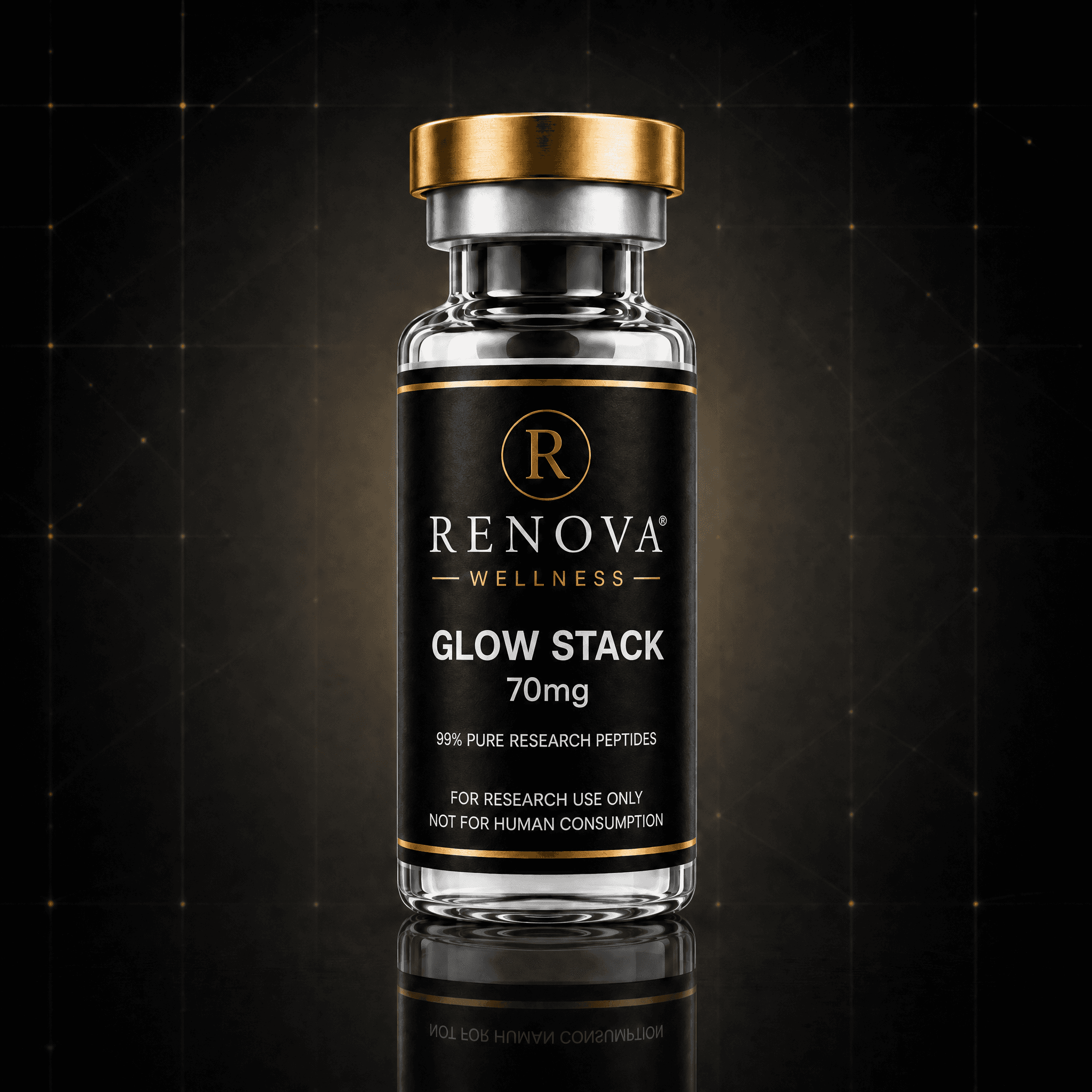
Researchers studying copper peptides may also review GHK-Cu, the closely related and better-characterized tripeptide, and the GLOW stack, where copper-peptide signaling appears alongside repair-associated components. The KLOW stack adds an anti-inflammatory arm to that same regenerative framing.
References
-
Pickart L, Margolina A. Regenerative and Protective Actions of the GHK-Cu Peptide in the Light of the New Gene Data. Int J Mol Sci. 2018;19(7):1987. PMID: 29986520. ↩ ↩2 ↩3 ↩4
-
Pyo HK, et al. The effect of tripeptide-copper complex on human hair growth in vitro. Arch Pharm Res. 2007;30(7):834–839. PMID: 17703734. ↩ ↩2 ↩3 ↩4
-
Maquart FX, et al. Stimulation of collagen synthesis in fibroblast cultures by the tripeptide-copper complex glycyl-L-histidyl-L-lysine-Cu²⁺. FEBS Lett. 1988;238(2):343–346. PMID: 3169264. ↩ ↩2
-
Pickart L. The human tri-peptide GHK and tissue remodeling. J Biomater Sci Polym Ed. 2008;19(8):969–988. PMID: 18644225. ↩ ↩2
-
Sen CK, et al. Copper-induced vascular endothelial growth factor expression and wound healing. Am J Physiol Heart Circ Physiol. 2002;282(5):H1821–H1827. PMID: 11959648. ↩ ↩2
Questions
Frequently Asked
What is AHK-Cu?
AHK-Cu, also called Copper Tripeptide-3, is a copper-binding tripeptide composed of alanine, histidine, and lysine (Ala-His-Lys) complexed with copper. It is studied in preclinical dermatology and hair-follicle research and in the context of extracellular-matrix signaling.
How does AHK-Cu compare to GHK-Cu?
AHK-Cu and GHK-Cu are both copper-binding tripeptides studied for signaling associated with skin and the extracellular matrix. They share the copper-carrying tripeptide motif but differ in sequence, and research often examines them side by side.
What research models has AHK-Cu been studied in?
Preclinical research has examined AHK-Cu in ex vivo human hair-follicle culture and cultured dermal papilla cells, alongside broader copper-peptide work on extracellular-matrix signaling and angiogenesis markers. These are laboratory and preclinical contexts only.
How is AHK-Cu supplied?
As a lyophilized powder reconstituted with bacteriostatic water for laboratory use and refrigerated (2–8°C) afterward. Renova material ships with a per-batch third-party COA.
Related Compounds
Shop the Research
Compare
Related comparisons
Keep Reading
Related Research
For Research Use Only · Not For Human Consumption · Renova Wellness™